
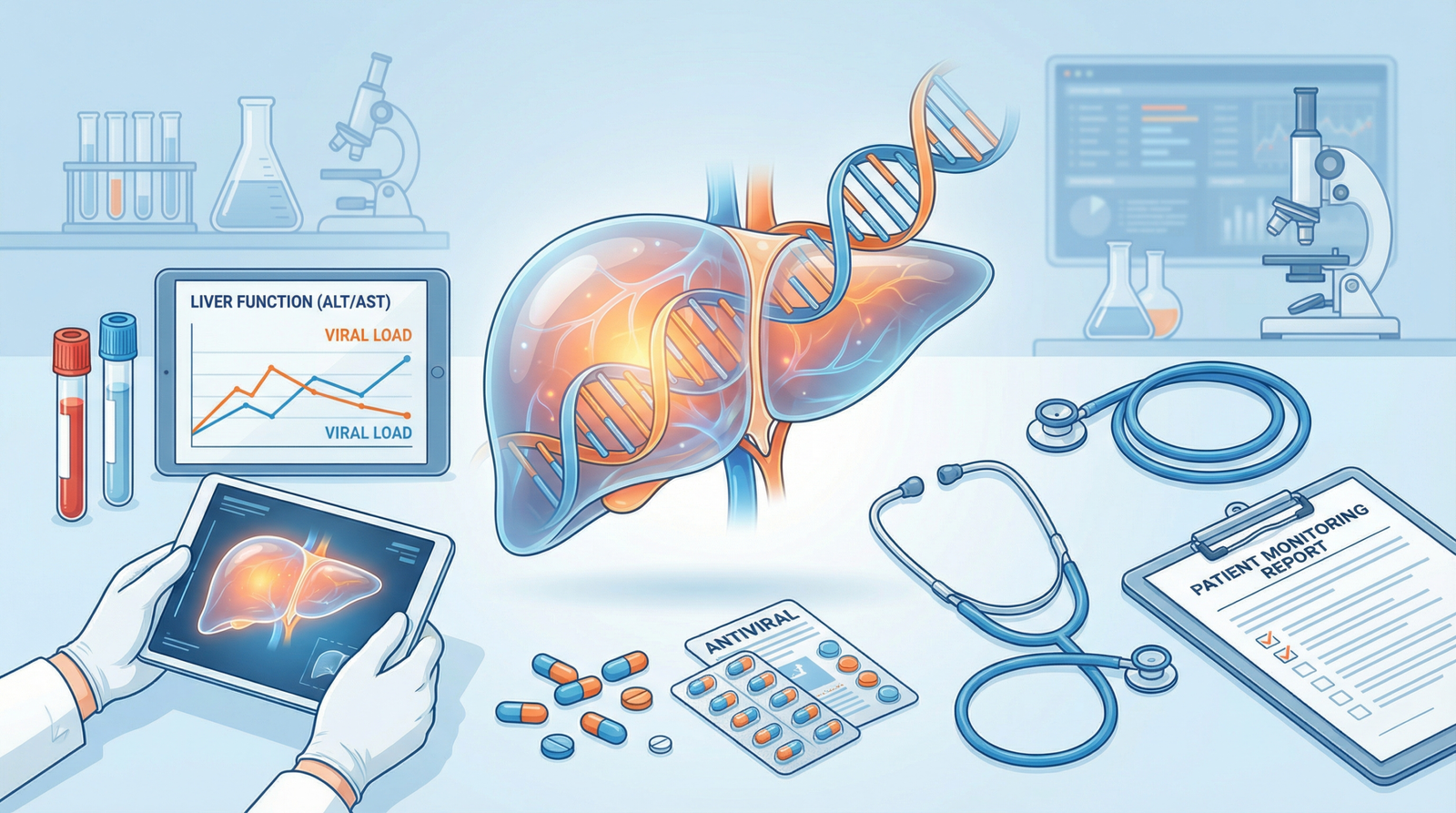
The liver is a central organ responsible for metabolism and detoxification in the human body. It plays a critical role in protein synthesis, hormone regulation, fat and carbohydrate metabolism, and, importantly, in the processing of medications. For this reason, during antiviral therapy—especially in the treatment of viral liver infections—monitoring liver function is an essential part of medical supervision.
Regular laboratory assessment allows healthcare providers to evaluate treatment effectiveness, medication safety, and overall patient condition.
Why Liver Monitoring Is Important During Treatment
Most antiviral medications are metabolized in the liver. This means the liver:
- activates certain drug compounds;
- breaks down medications;
- participates in eliminating metabolites from the body.
If liver function is impaired, the metabolism of medications may change, potentially affecting both treatment efficacy and drug tolerability.
Key Laboratory Parameters to Monitor
During antiviral therapy, physicians typically recommend a panel of blood tests.
ALT (Alanine Aminotransferase)
A marker of liver cell injury. Elevated levels may indicate active inflammation.
AST (Aspartate Aminotransferase)
An additional enzyme reflecting liver and muscle cell integrity.
Bilirubin
Indicates the liver’s ability to process breakdown products of hemoglobin.
Alkaline Phosphatase (ALP) and GGT
Markers associated with bile duct function.
Albumin
A major plasma protein synthesized by the liver, reflecting its synthetic capacity.
INR (International Normalized Ratio) or Prothrombin Time
Measures the liver’s ability to produce clotting factors.
Viral Load
Quantifies the amount of viral particles in the bloodstream and helps assess treatment response.
When Should Testing Be Performed?
The frequency of monitoring is determined individually by a healthcare provider. However, testing is commonly performed:
- before starting treatment;
- several weeks after therapy initiation;
- mid-course during treatment;
- after completing therapy;
- during follow-up observation.
This approach enables timely therapy adjustment and reduces the risk of adverse reactions.
Role of Modern Antiviral Medications
Modern direct-acting antiviral agents (DAAs) are characterized by high efficacy and improved safety profiles. These medications target specific stages of viral replication, leading to significant reductions in viral load and improvement in laboratory parameters.
Nevertheless, liver function monitoring remains an important component of treatment, regardless of the antiviral agent used.
Practical Recommendations During Therapy
To support liver health during antiviral treatment, patients are generally advised to:
- strictly follow the prescribed treatment regimen;
- avoid self-adjusting dosages;
- consult a physician before taking additional medications or supplements;
- maintain a balanced diet;
- limit alcohol consumption;
- monitor body weight;
- ensure adequate rest.
Additional Information About Liver Function and Therapy
- The liver metabolizes most medications used in clinical practice.
- Laboratory changes may appear before clinical symptoms develop.
- Regular monitoring helps assess treatment effectiveness.
- Normalization of laboratory values may occur gradually even during successful therapy.
- Systematic follow-up enables individualized treatment adjustments.
Conclusion
Liver function monitoring during antiviral therapy is a fundamental component of safe and effective treatment. Regular laboratory evaluations allow healthcare professionals to assess the body’s response to medication, adjust therapy when necessary, and optimize clinical outcomes.
All antiviral treatment should be conducted under medical supervision with appropriate laboratory monitoring.