
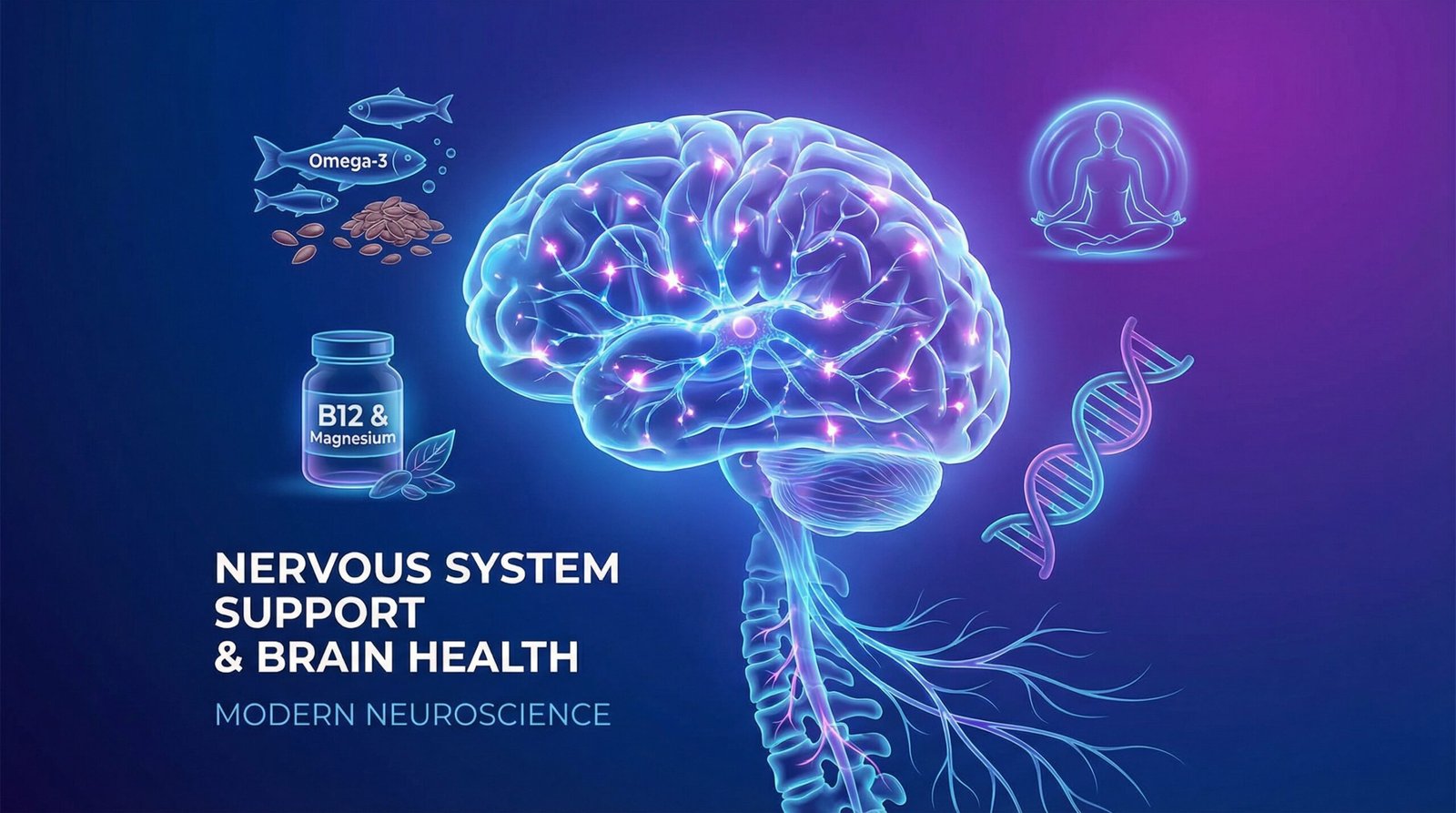
The nervous system controls every process in the body — from movement and memory to mood and attention. Any disruption in its function can affect quality of life, productivity, sleep, and emotional balance. Therefore, supporting the nervous system is an essential component of prevention and management of many conditions, including cognitive disorders, attention difficulties, stress-related disturbances, and neurological conditions.
How the Nervous System Works
The nervous system consists of two main divisions:
Central Nervous System (CNS):
- brain
- spinal cord
Peripheral Nervous System:
- nerves
- nerve endings
- receptors
Its primary function is transmitting electrochemical signals between body cells. This process relies on neurotransmitters — chemical messengers that regulate:
- attention and focus
- anxiety levels
- thinking speed
- memory
- behavioral responses
Factors That Affect the Nervous System
Nervous system health depends on many factors:
- chronic stress
- sleep deprivation
- micronutrient deficiencies
- hormonal changes
- infections
- toxins
- medications
Long-term exposure to negative factors may lead to nervous system exhaustion and functional disturbances.
Signs of Nervous System Overload
Symptoms that may indicate imbalance include:
- difficulty concentrating
- irritability
- fatigue
- memory problems
- sleep disturbances
- headaches
- internal tension
If such symptoms persist, medical consultation is recommended.
Role of Neurotransmitters in Brain Function
Neurotransmitter balance determines emotional and cognitive stability.
Key neurotransmitters:
- dopamine — motivation and attention
- norepinephrine — alertness and stress response
- serotonin — mood regulation
- acetylcholine — memory and learning
Some medications act on these neurotransmitters to help normalize cognitive performance and behavioral regulation.
Pharmacological Support for the Nervous System
In neurological practice, several medication groups may be used:
- nootropics
- neuroprotective agents
- attention-enhancing medications
- antidepressants
- mood stabilizers
- neurotransmitter-modulating therapies
For example, medications based on atomoxetine are used to help manage attention regulation and impulse control by influencing norepinephrine activity in the brain and supporting cognitive regulation.
Vitamins and Minerals Important for the Nervous System
Proper neuronal function requires adequate levels of key nutrients:
- magnesium — helps reduce nervous excitability
- B-group vitamins — support nerve signal transmission
- omega-3 fatty acids — support neuronal membrane structure
- zinc — important for cognitive processes
- iron — contributes to attention and mental performance
Deficiencies in these nutrients may negatively affect brain function.
Non-Medication Ways to Support the Nervous System
In addition to medical therapy, lifestyle factors play a major role:
- adequate sleep (7–9 hours)
- regular physical activity
- cognitive training
- stress management
- structured daily routine
- balanced nutrition
A comprehensive approach provides the most stable and effective results.
Nutrition for Nervous System Health
Diet plays a crucial role in supporting brain and nerve function. Certain foods contain nutrients that enhance neural signaling, protect neurons, and improve cognitive performance.
Fatty fish — rich in omega-3 fatty acids that support brain health
Cruciferous vegetables — contain antioxidants and B vitamins
Berries — high in protective polyphenols
Nuts and seeds — sources of magnesium, zinc, and vitamin E
Eggs — contain choline, important for memory neurotransmitters
Whole grains — provide steady energy for the brain
Legumes — rich in amino acids and nutrients
Dark chocolate — may support mood and antioxidant protection
Foods to Limit
- excess sugar
- trans fats
- alcohol
- excessive caffeine
- ultra-processed foods
These may negatively affect nervous system balance and cognitive function.
When to Consult a Specialist
Medical consultation is advisable if:
- symptoms persist for several weeks
- daily functioning is affected
- work or learning performance declines
- behavioral changes appear
Early assessment helps prevent progression of functional disturbances.
Scientific Facts About the Nervous System
- The brain consumes about 20% of the body’s total energy.
- Nerve impulses can travel faster than 100 meters per second.
- The human brain contains more than 80 billion neurons.
- Neuroplasticity allows the brain to adapt and form new connections.
- Sleep plays a crucial role in memory consolidation and neural recovery.
Conclusion
Supporting the nervous system involves a combination of healthy lifestyle habits, balanced nutrition, and, when necessary, properly selected medical therapy. Paying attention to early symptoms and consulting healthcare professionals helps maintain cognitive health, productivity, and emotional stability.