


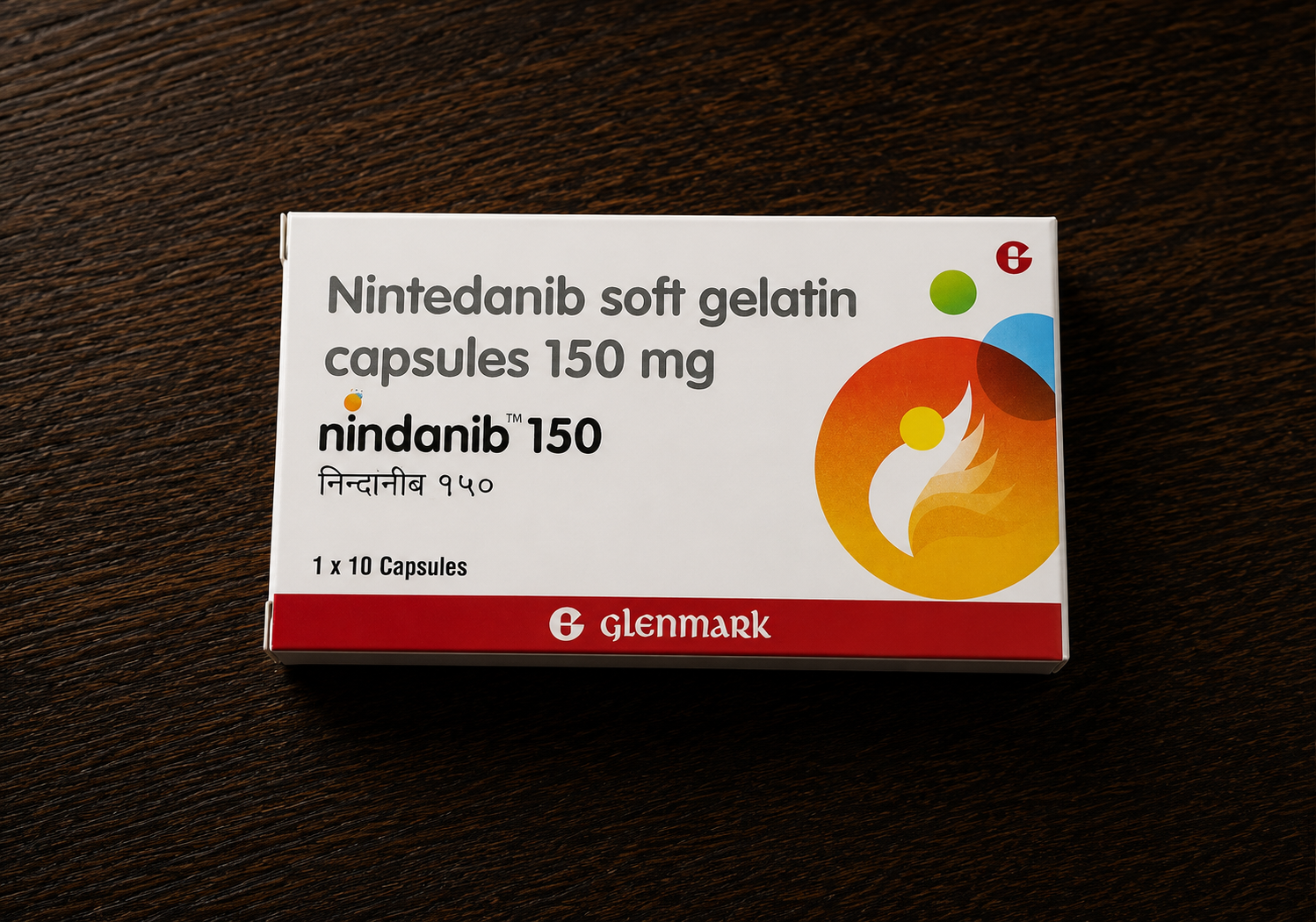
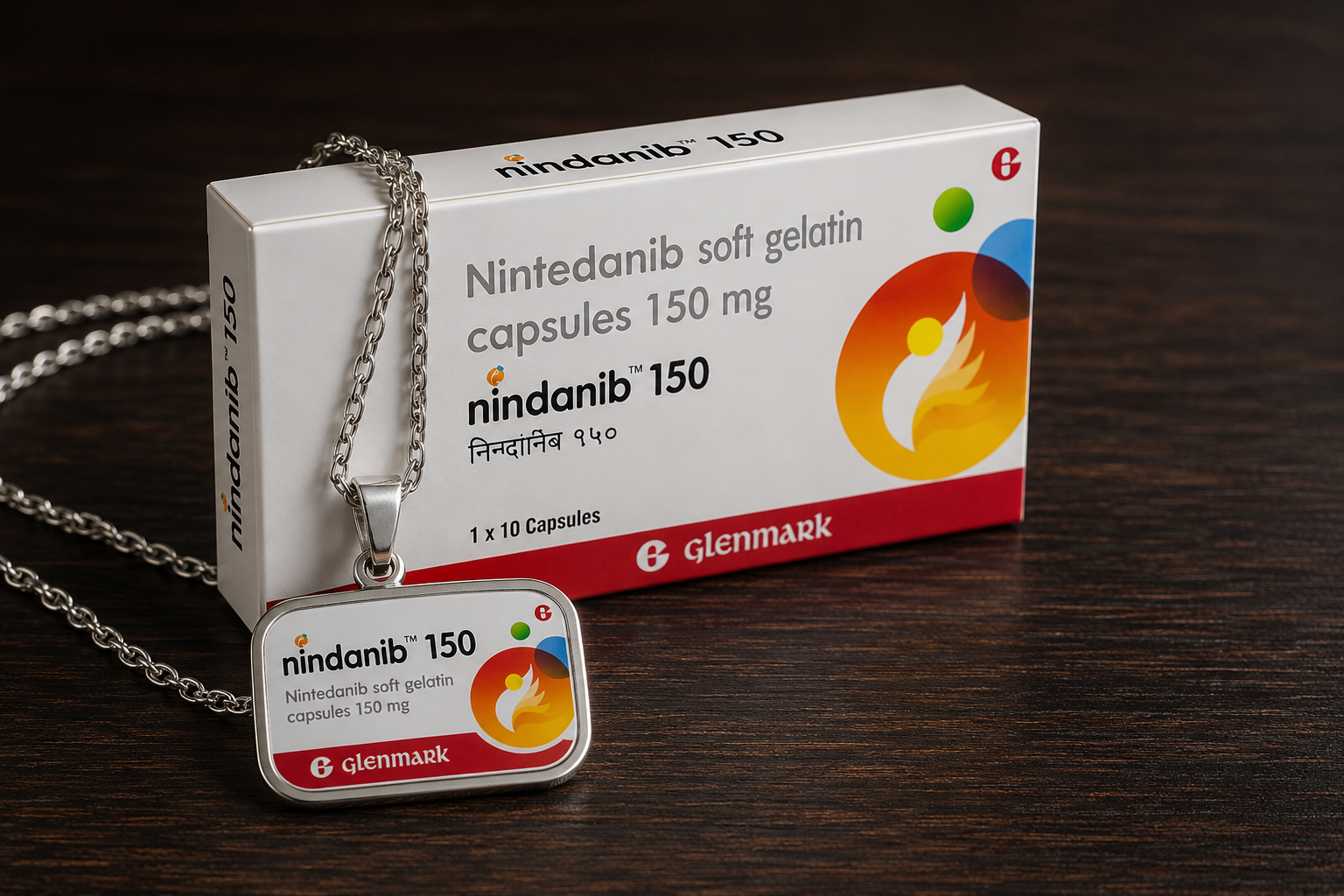
Nindanib (Nintedanib) Capsules 150 mg No.10
$50,70
Nindanib is a modern medicine containing
nintedanib (Nintedanib), used in targeted therapy
for certain oncological and progressive lung diseases.
The medicine helps slow tissue fibrosis processes, suppress abnormal
cell growth, and inhibit the formation of new blood vessels.
Dosage form: 150 mg capsules.
Package: 10 capsules.
Description
Nindanib (Nintedanib) Capsules 150 mg No.10
Nindanib is a modern targeted therapy medicine containing
nintedanib (Nintedanib), used in certain progressive lung and oncological diseases.
The medicine belongs to the group of tyrosine kinase inhibitors and provides
antifibrotic and antitumor activity by helping suppress abnormal cell growth,
angiogenesis processes, and tissue fibrosis progression.
Nintedanib is widely used in modern pulmonology and oncology as part of
complex therapy under medical supervision.
Pharmacological Group
- Antineoplastic agents
- Tyrosine kinase inhibitors
- Antifibrotic medicines
- Targeted therapy medicines
Mechanism of Action
Nintedanib blocks VEGF, PDGF, and FGF receptors involved in new blood vessel
formation, fibrosis development, and abnormal cell growth.
As a result, the medicine:
- slows the progression of pulmonary fibrosis;
- helps reduce the formation of new blood vessels in tumors;
- suppresses abnormal cell growth;
- supports lung function;
- helps slow disease progression.
Indications for Use
- Idiopathic pulmonary fibrosis (IPF)
- Chronic fibrosing interstitial lung diseases
- Progressive interstitial lung diseases
- Non-small cell lung cancer (NSCLC)
- Lung adenocarcinoma
- Complex targeted therapy in oncology
- Diseases associated with progressive pulmonary fibrosis
Therapeutic Properties
- Antifibrotic activity
- Antitumor action
- Angiogenesis inhibition
- Slowing tissue fibrosis progression
- Support of respiratory system function
- Targeted effect on growth factor receptors
- Inhibition of pathological vascular growth
- Support in controlling disease progression
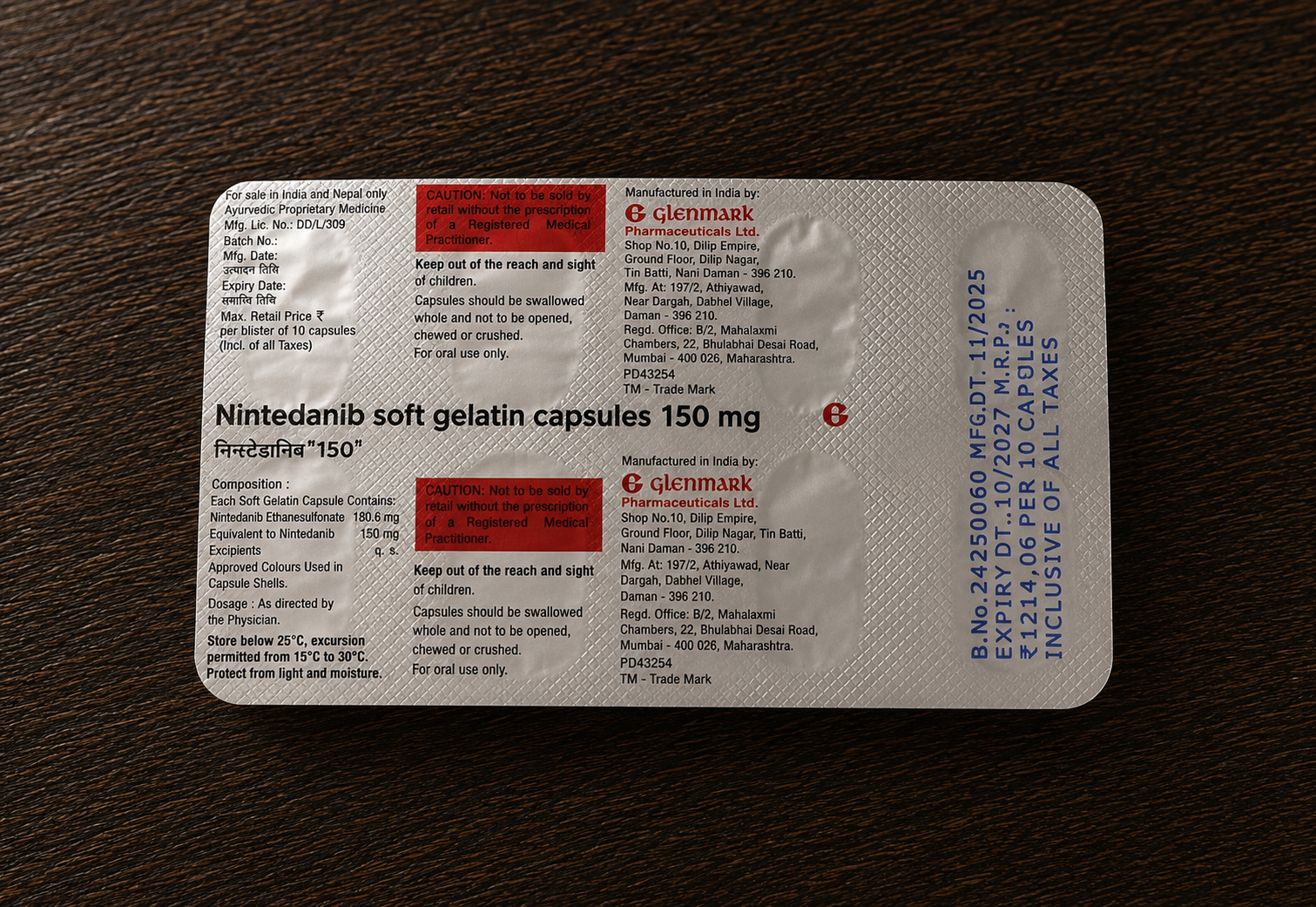
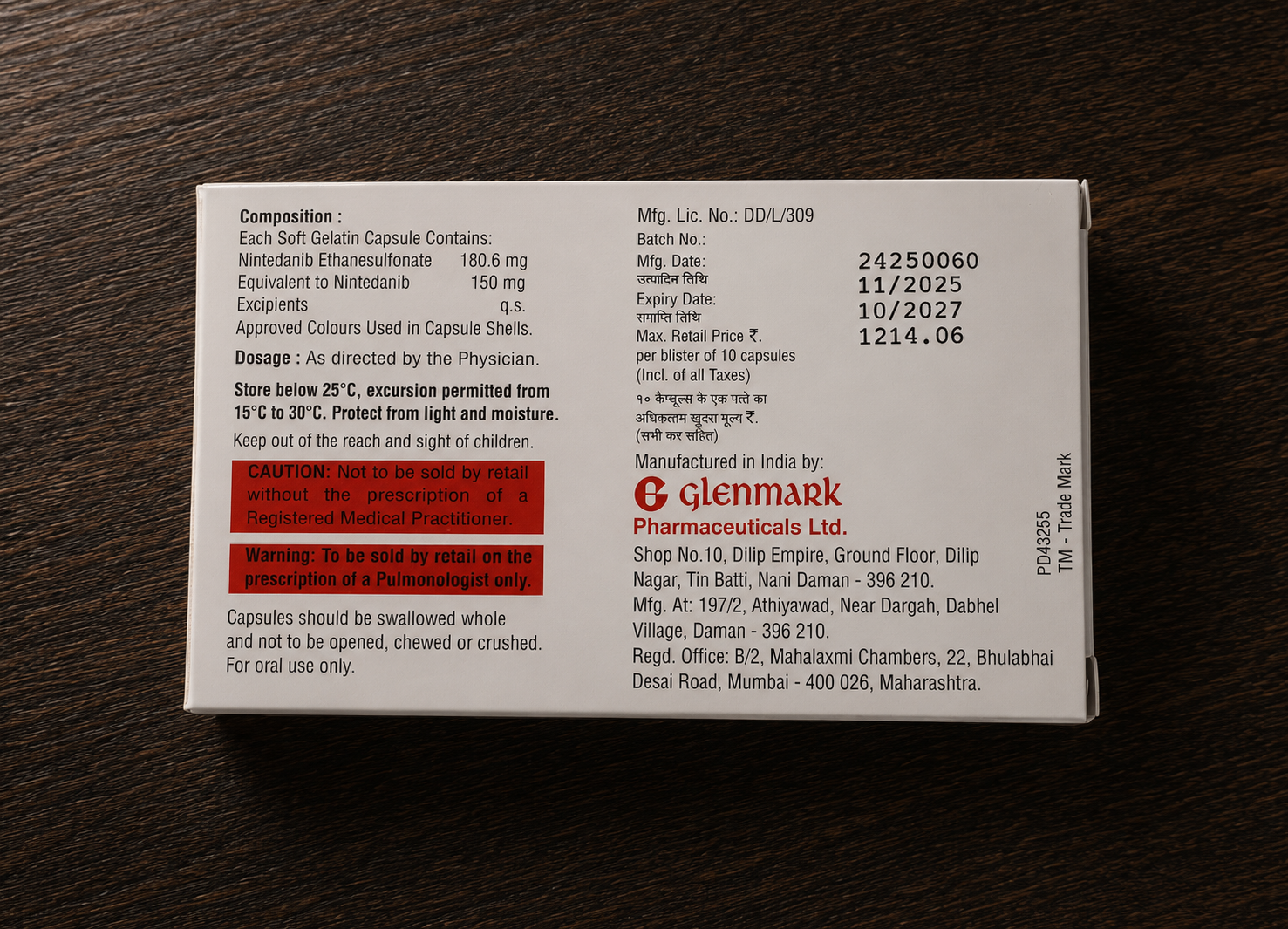
Composition
| Component | Content |
|---|---|
| Nintedanib | 150 mg |
Dosage Form
Soft gelatin capsules for oral administration.
Directions for Use
The treatment regimen and dosage are determined individually by the physician
depending on the disease and patient condition.
- Capsules are taken orally;
- preferably during meals;
- swallow the capsule whole;
- do not chew or open the capsule;
- take with sufficient water.
Side Effects
| Common Side Effects | Serious Reactions |
|---|---|
| • Diarrhea • Nausea • Vomiting • Abdominal pain • Decreased appetite • Weight loss • Elevated liver enzymes |
• Liver function disorders • Bleeding • Thromboembolic complications • High blood pressure • Gastrointestinal perforation • Severe allergic reactions |
Contraindications
- Hypersensitivity to nintedanib or product components
- Severe liver impairment
- Pregnancy
- Breastfeeding period
- Children and adolescents
- Use with caution in cardiovascular diseases
Special Precautions
- Therapy should be carried out only under medical supervision
- Regular liver function monitoring is required
- Blood pressure monitoring is necessary
- There may be a risk of bleeding during treatment
- Self-medication is not recommended
- Pregnancy should be avoided during treatment
- Consult a doctor immediately if severe adverse reactions occur
Drug Interactions
Nintedanib may interact with medicines affecting liver enzyme systems
and P-gp transport proteins.
Before starting treatment, patients should inform their physician about
all medicines they are taking.
Advantages and Disadvantages
| Advantages | Disadvantages |
|---|---|
| ✔ Modern targeted therapy ✔ Antifibrotic effect ✔ Used in pulmonology and oncology ✔ Suppresses angiogenesis ✔ Complex mechanism of action ✔ Helps slow disease progression |
✖ Possible serious side effects ✖ Requires medical supervision ✖ High liver load ✖ Not suitable for self-medication |
FAQ — Questions & Answers
What is Nindanib used for?
The medicine is used for pulmonary fibrosis and certain forms of lung cancer.
What pharmacological group does it belong to?
Nindanib belongs to tyrosine kinase inhibitors and targeted therapy medicines.
Is it chemotherapy?
No. It is a targeted therapy medicine with a different mechanism of action.
Can it be used without a doctor’s prescription?
No. The medicine should only be used as prescribed by a physician.
Can the capsule be opened or chewed?
No. The capsule should be swallowed whole.
Is laboratory monitoring required?
Yes. Liver function and other parameters should be monitored during treatment.
Can it be used during pregnancy?
No. The medicine is contraindicated during pregnancy.
Can gastrointestinal side effects occur?
Yes. Diarrhea, nausea, and abdominal pain are among the most common reactions.
How long does treatment last?
The duration of therapy is determined individually by the physician.
Storage Conditions
Store in a dry place at temperatures below 25°C. Protect from moisture and direct sunlight.
Package
10 capsules of 150 mg.
Manufacturer
Glenmark Pharmaceuticals, India.
Related products
-
- Out of Stock
- Neurological products, Pharmaceutical products
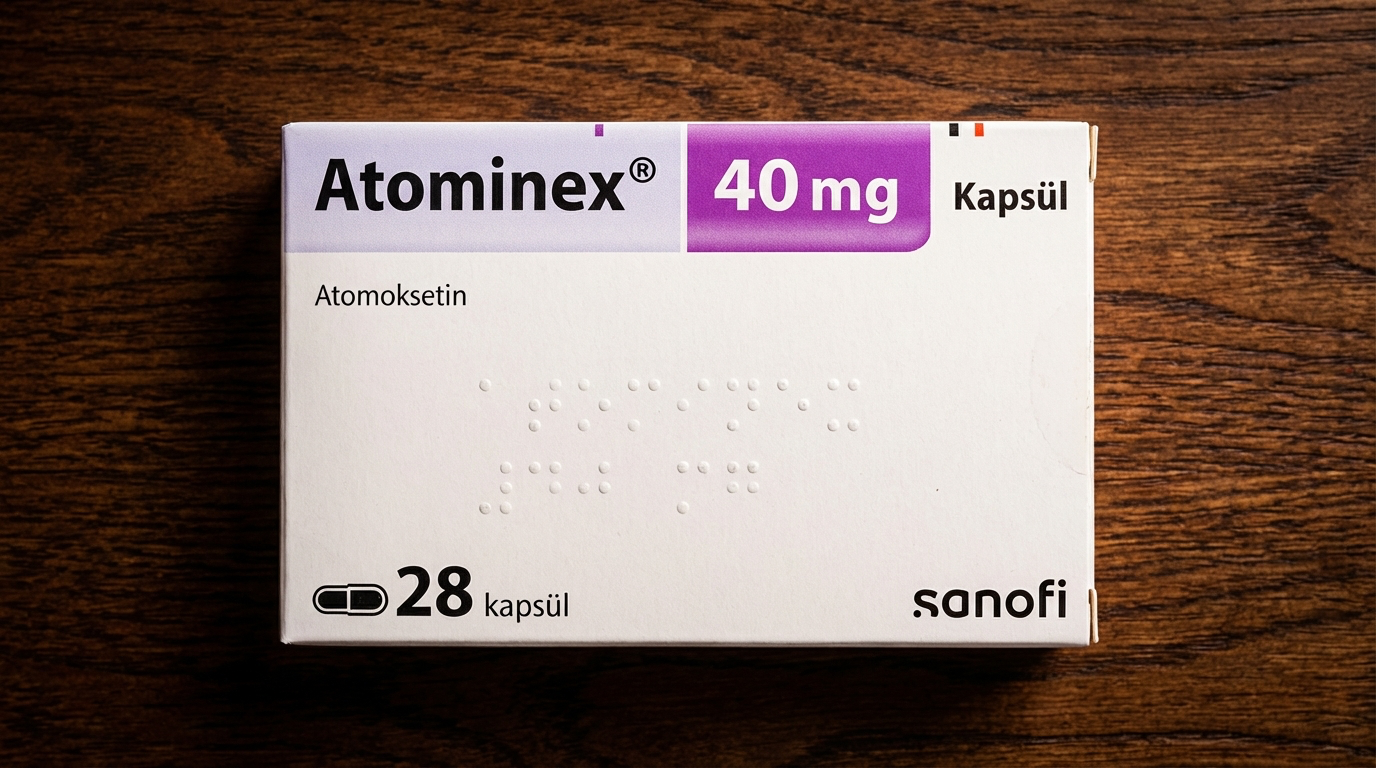
- Atominex (Atomoxetine) 40 mg №28
- $49,40
- Read more
-
Reviews
There are no reviews yet.