

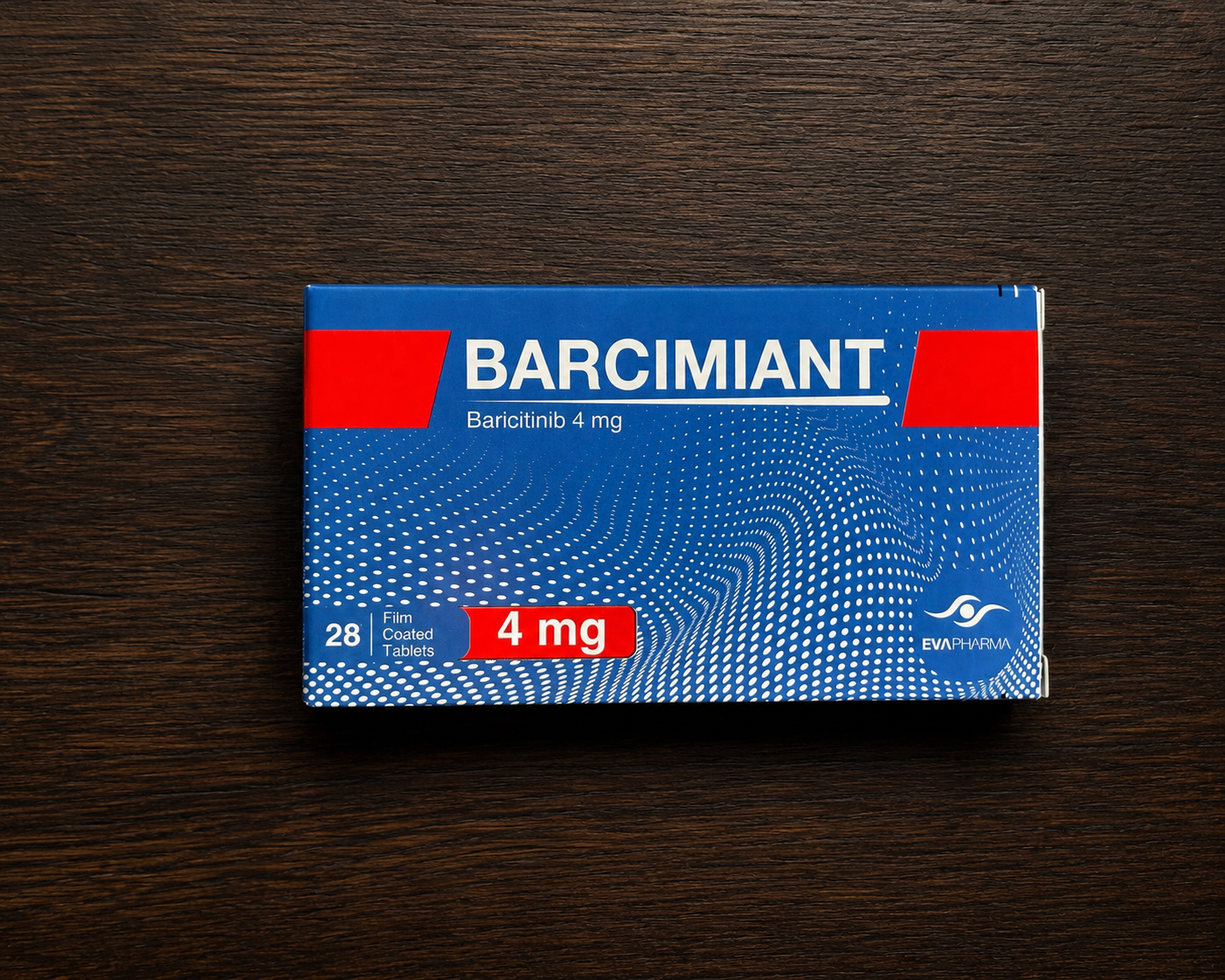
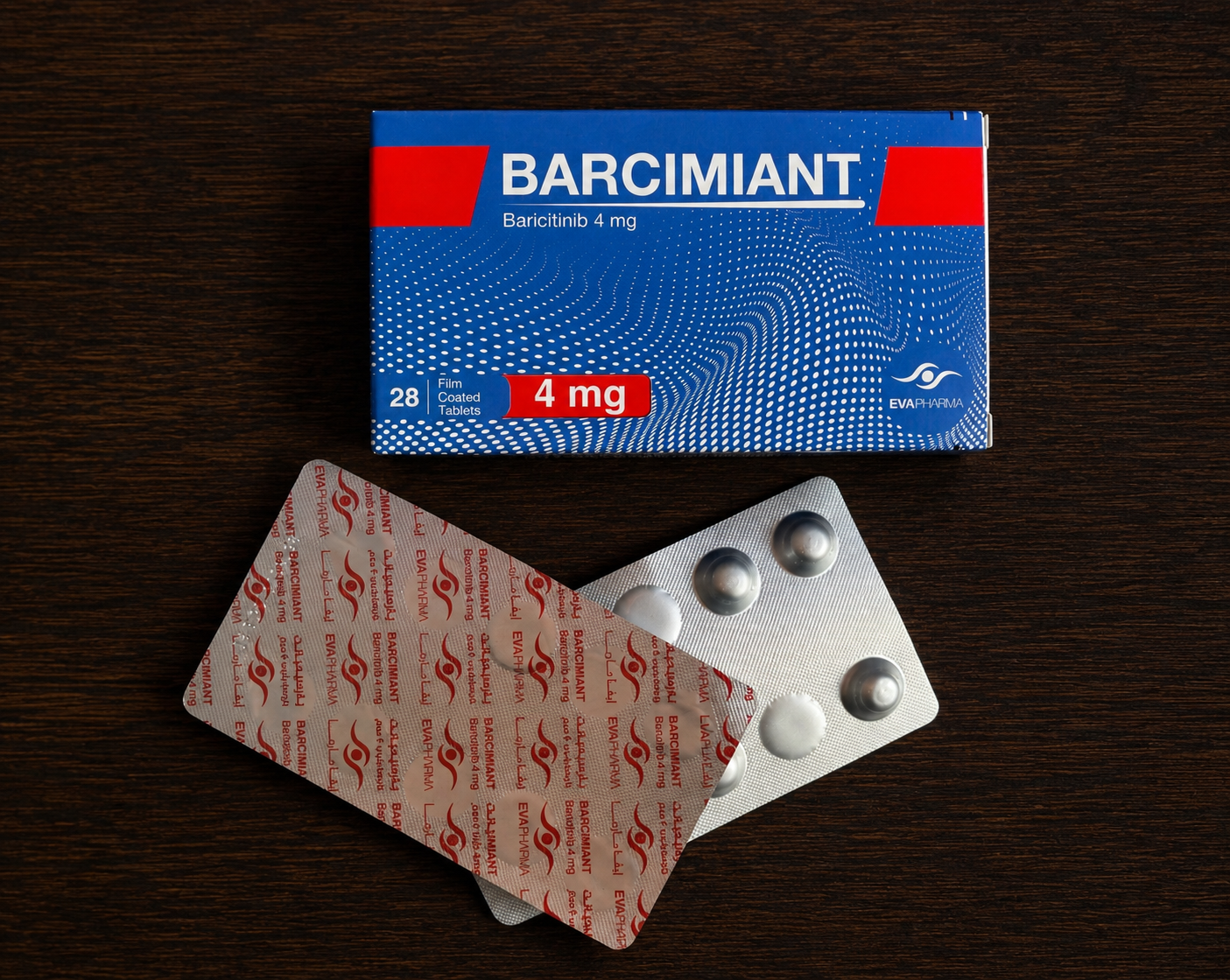
Barcimiant (Baricitinib) 4 mg tablets No. 28
$97,50
Barcimiant 4 mg
Modern baricitinib medication for systemic therapy as prescribed by a physician.
Used in clinical practice for certain immune-inflammatory conditions and attracts particular attention in dermatology and trichology.
Description
BARCIMIANT 4 mg — modern baricitinib for patients requiring systemic disease control
BARCIMIANT is a baricitinib medication in a 4 mg dosage form presented as film-coated tablets. Baricitinib belongs to the group of selective JAK inhibitors and occupies an important place in modern international clinical practice for certain immune-inflammatory and autoimmune conditions where a targeted systemic therapeutic approach is required.
The medication has attracted particular attention in dermatology and trichology due to clinical data regarding its use in severe alopecia areata, where significant hair regrowth was demonstrated in a portion of patients during therapy.
Key Product Information
- Active ingredient: Baricitinib
- Dosage: 4 mg
- Pharmaceutical form: Film-coated tablets
- Pack size: 28 tablets
- Pharmacological group: Immunosuppressants (Selective JAK1/JAK2 inhibitor)
What is baricitinib and how does it work?
Baricitinib affects Janus kinase (JAK) signaling pathways involved in the development of inflammation and pathological immune responses. Because of this mechanism, the medication is considered a modern systemic therapy capable of addressing not only external manifestations of disease but also the immune-mediated mechanisms supporting the inflammatory process.
International medical sources associate baricitinib with use in conditions such as:
- Rheumatoid arthritis
- Atopic dermatitis
- Severe alopecia areata
- Certain juvenile inflammatory disorders
The exact indication and treatment plan must always be determined individually by a qualified physician according to the diagnosis, medical history, laboratory findings, and local prescribing information.
Targeted systemic action
BARCIMIANT acts on important immune-inflammatory pathways, making it one of the modern therapeutic tools used for controlled systemic treatment.
High interest in trichology and alopecia areata
Baricitinib has become one of the most discussed systemic treatment options for severe alopecia areata in adult patients.
Alopecia areata is an autoimmune condition in which the immune system attacks hair follicles, leading to partial or extensive hair loss. Due to its mechanism of action, baricitinib has attracted considerable interest in trichology because it targets immune activation pathways associated with this process.
Clinical studies AA-1 and AA-2 evaluated patients with at least 50% scalp hair loss lasting longer than six months. The primary endpoint was assessed at Week 36 of treatment.
When baricitinib attracts particular attention
- Severe hair loss
- Long-term alopecia areata
- Need for systemic therapy
- Cases requiring physician-supervised treatment decisions
Clinical study results
In AA-1:
- 22% of patients achieved the target result with 2 mg
- 35% achieved the target result with 4 mg
- Compared to 5% in the placebo group
In AA-2:
- 17% achieved the target result with 2 mg
- 32% achieved the target result with 4 mg
- Compared to 3% in the placebo group
These findings contributed to baricitinib becoming an important topic in modern discussions of severe alopecia areata treatment.
Use in international clinical practice
According to EMA information, baricitinib is used internationally in selected forms of:
- Rheumatoid arthritis
- Atopic dermatitis
- Severe alopecia areata
- Certain juvenile inflammatory conditions
This highlights its significance as a modern systemic therapeutic option in several medical specialties.
When the medication may be considered relevant
- When control of immune-inflammatory activity is required
- When a physician considers JAK inhibition appropriate
- When a modern targeted systemic approach is important
- When treatment is conducted under professional medical supervision
Dosage and administration
International regulatory materials describe dosing regimens of 2 mg and 4 mg once daily for different clinical situations.
Dose selection depends on:
- Indication
- Patient age
- Risk factors
- Laboratory findings
- Concomitant conditions
- Other clinical parameters
The final treatment regimen must always be determined by a physician.
Important administration considerations
- Usually taken once daily
- Dosage should never be adjusted independently
- Increased caution may be required in higher-risk patients
- Treatment must follow professional medical recommendations
Important warnings and safety monitoring
Baricitinib is a systemic medication requiring careful medical supervision.
Official sources mention potential risks including:
- Serious infections
- Viral reactivation
- Thrombosis
- Laboratory abnormalities
- Increased attention in elderly patients
- Cardiovascular risk considerations
Before therapy physicians may evaluate
- Infection risks
- Tuberculosis risk
- Cardiovascular status
- Thrombosis predisposition
- Compatibility with other medications
During treatment monitoring may include
- Complete blood count
- Neutrophils and lymphocytes
- Hemoglobin
- Liver function markers
- Lipid profile
- Clinical symptoms of infection or adverse reactions
Important notice
BARCIMIANT is not intended for self-medication without physician supervision. Treatment decisions must be based on diagnosis, medical history, concomitant diseases, and clinical evaluation.
Possible adverse reactions
Commonly described adverse reactions in international medical materials include:
- Upper respiratory tract infections
- Headache
- Acne
- Elevated cholesterol
- Increased creatine phosphokinase
- Urinary tract infections
- Changes in liver enzymes
- Folliculitis
- Fatigue
- Nausea
- Anemia
- Neutropenia
- Abdominal pain
- Herpes zoster
- Weight gain
The frequency and severity of adverse reactions may vary depending on dosage, duration of therapy, indication, and individual patient factors.
Patients should contact a healthcare professional if new symptoms occur during therapy.
Frequently Asked Questions
Is BARCIMIANT a hormonal medication?
No. Baricitinib is not a hormonal therapy. It is a selective JAK inhibitor affecting signaling pathways involved in immune response and inflammation.
Is baricitinib used for hair loss?
Yes. Baricitinib has become one of the most recognized systemic approaches for severe alopecia areata treatment in adult patients. Treatment decisions must always be made by a physician.
Are laboratory tests required during therapy?
Yes. International medical materials indicate the importance of monitoring blood parameters, lipid profile, and other safety indicators during treatment.
Can the medication be used without physician consultation?
No. This is a systemic medication requiring professional supervision, risk assessment, and individualized therapy planning.
Sources of information
- EMA official information regarding baricitinib
- Clinical studies AA-1 and AA-2 (NEJM publication)
- FDA approval of Olumiant for severe alopecia areata
Medical disclaimer
This information is provided for informational and educational purposes only and does not replace professional medical advice. Diagnosis, treatment decisions, dosage regimens, and safety monitoring must always be determined individually by a qualified healthcare professional.
With this people buy…
Related products
-
- Out of Stock
- Neurological products, Pharmaceutical products
- Atominex (atomoxetină) 60 mg №28
- $52,00
- Read more
-
Reviews
There are no reviews yet.