
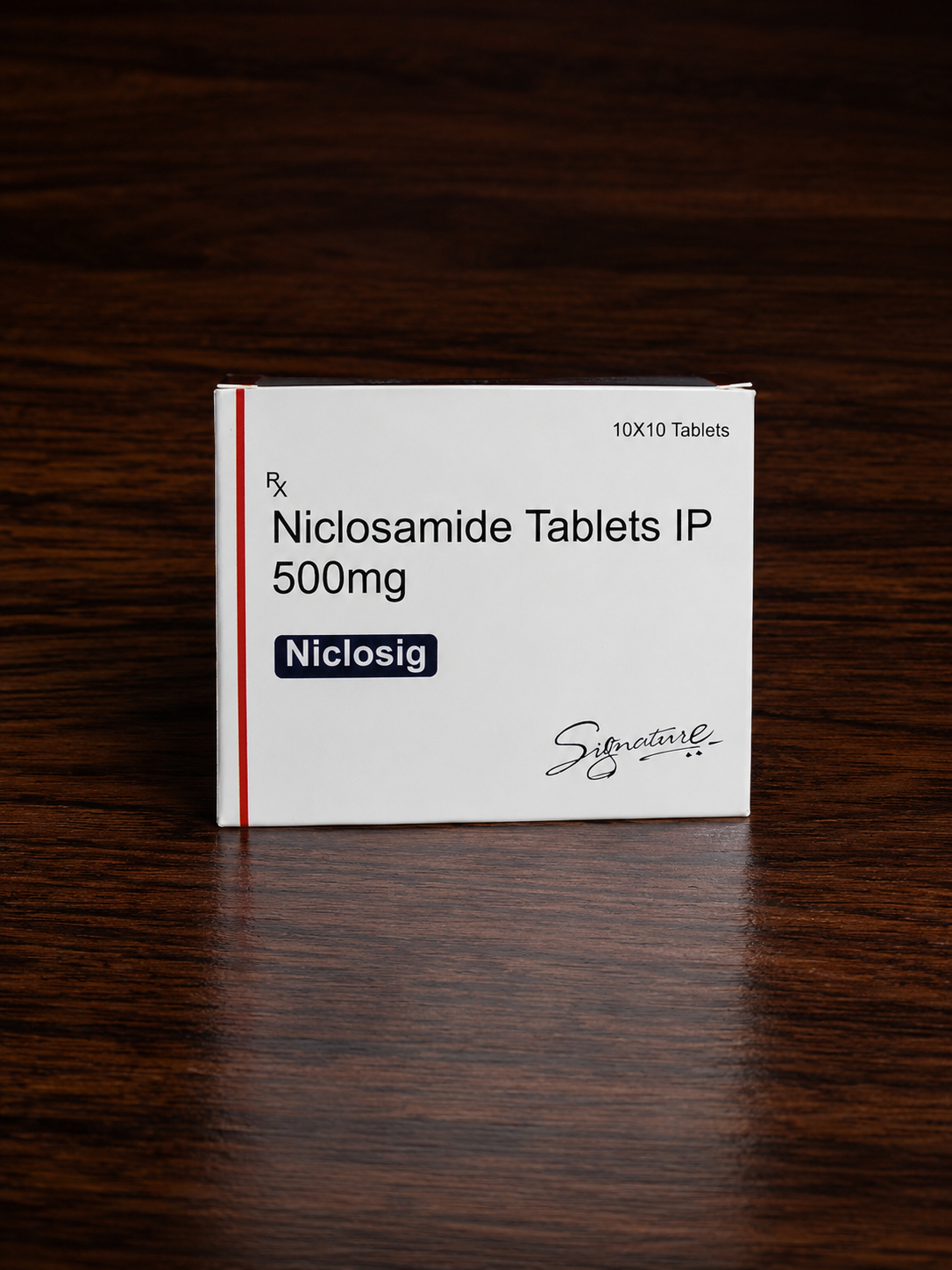
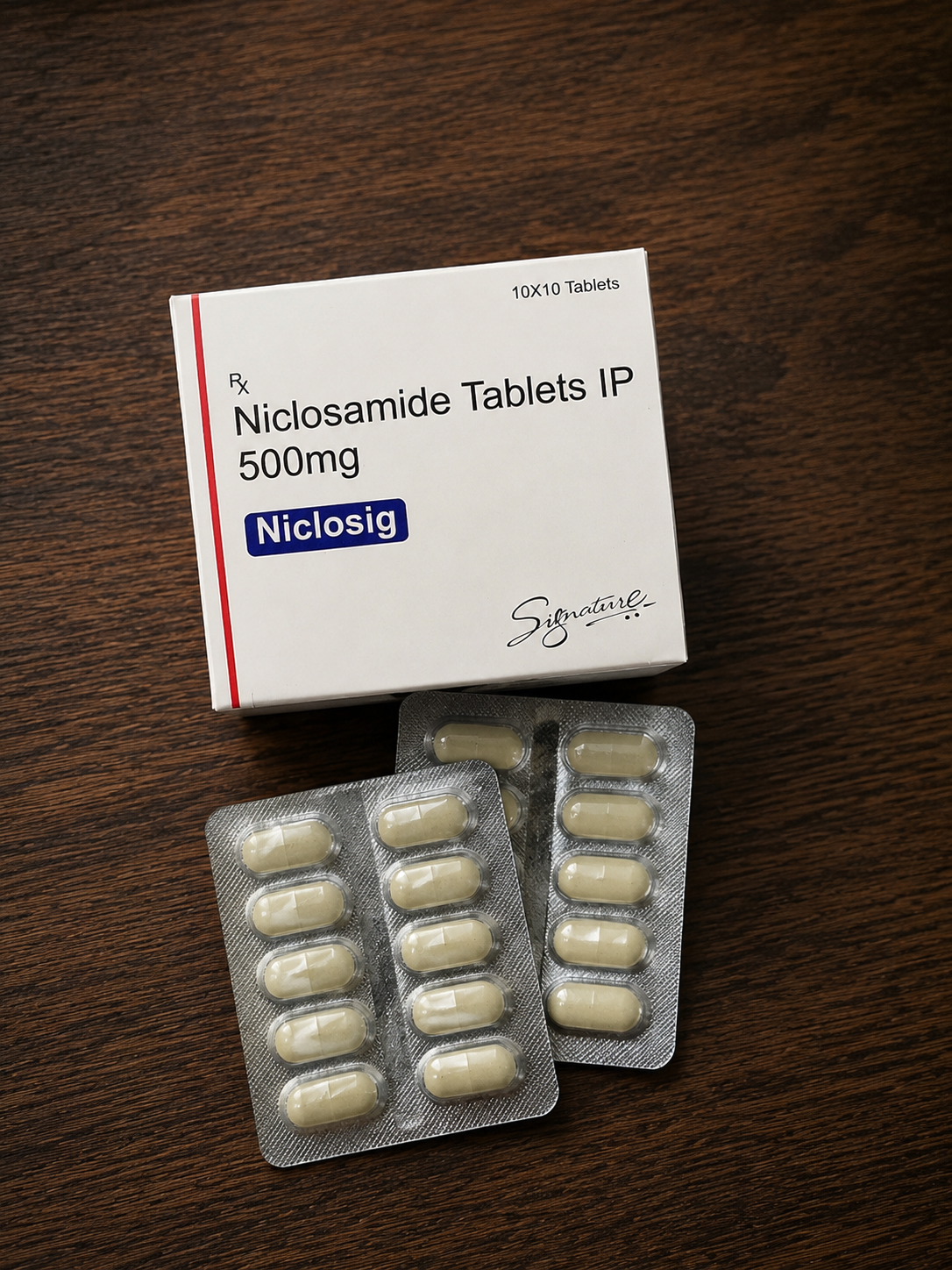
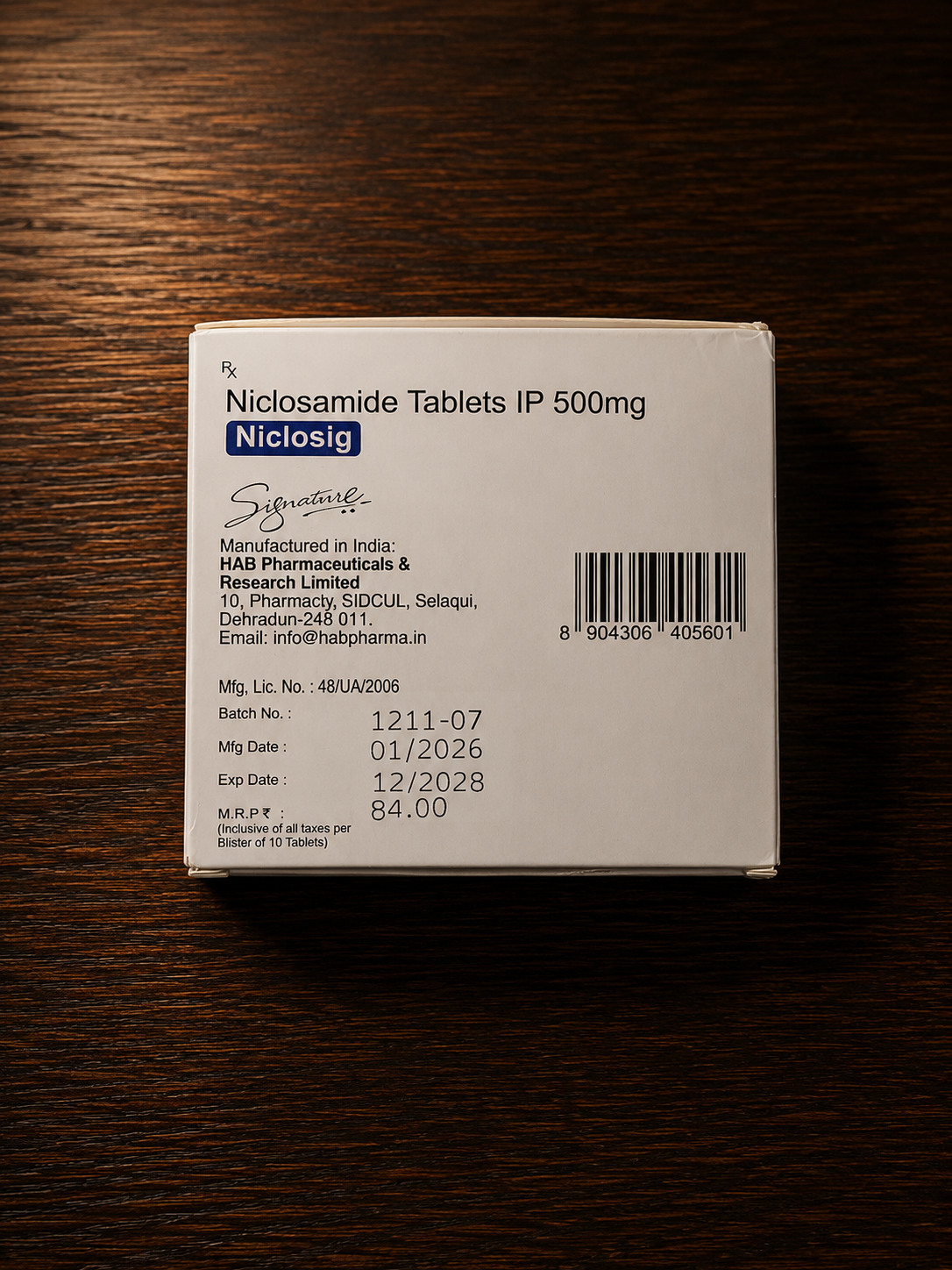
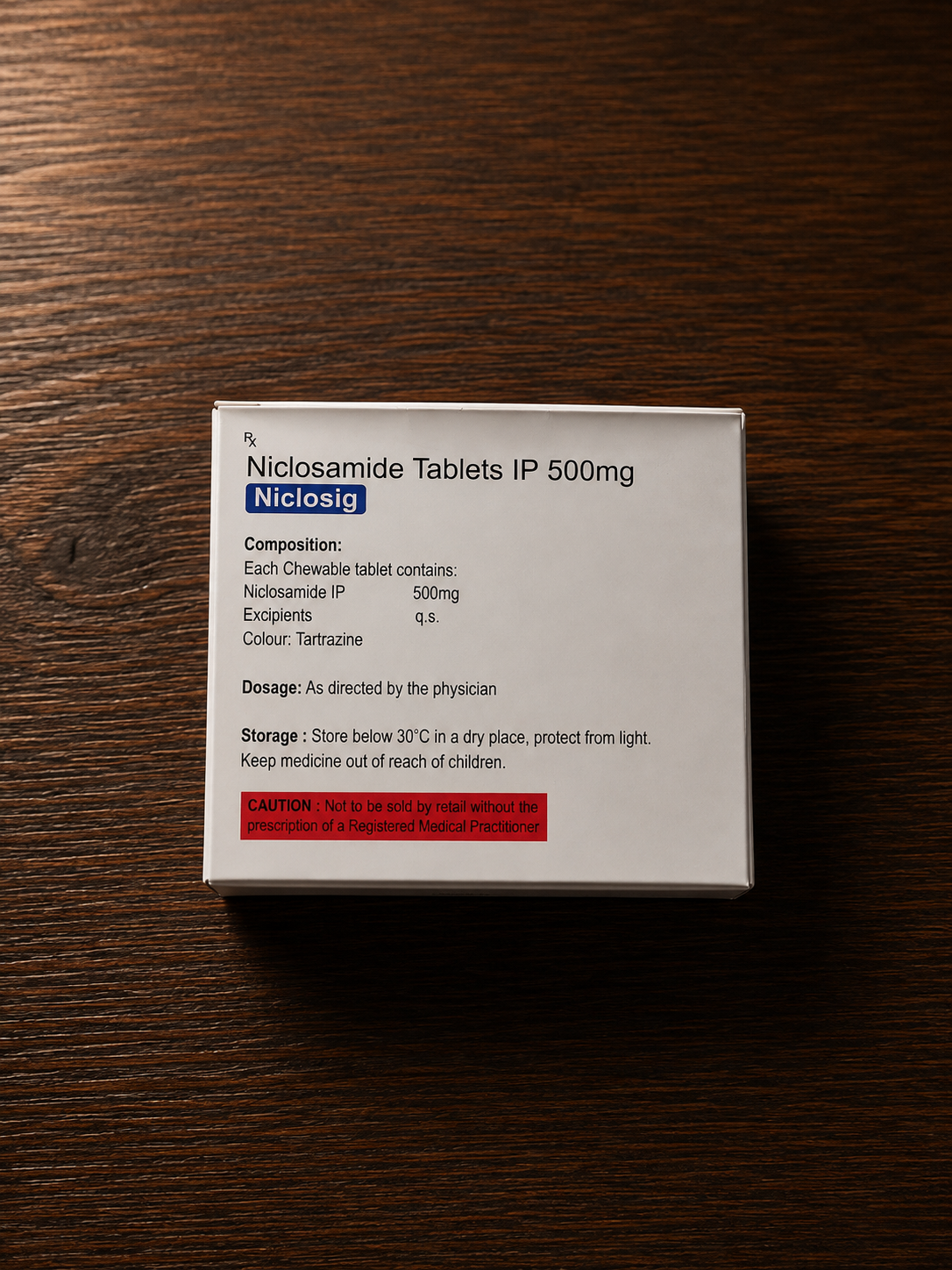
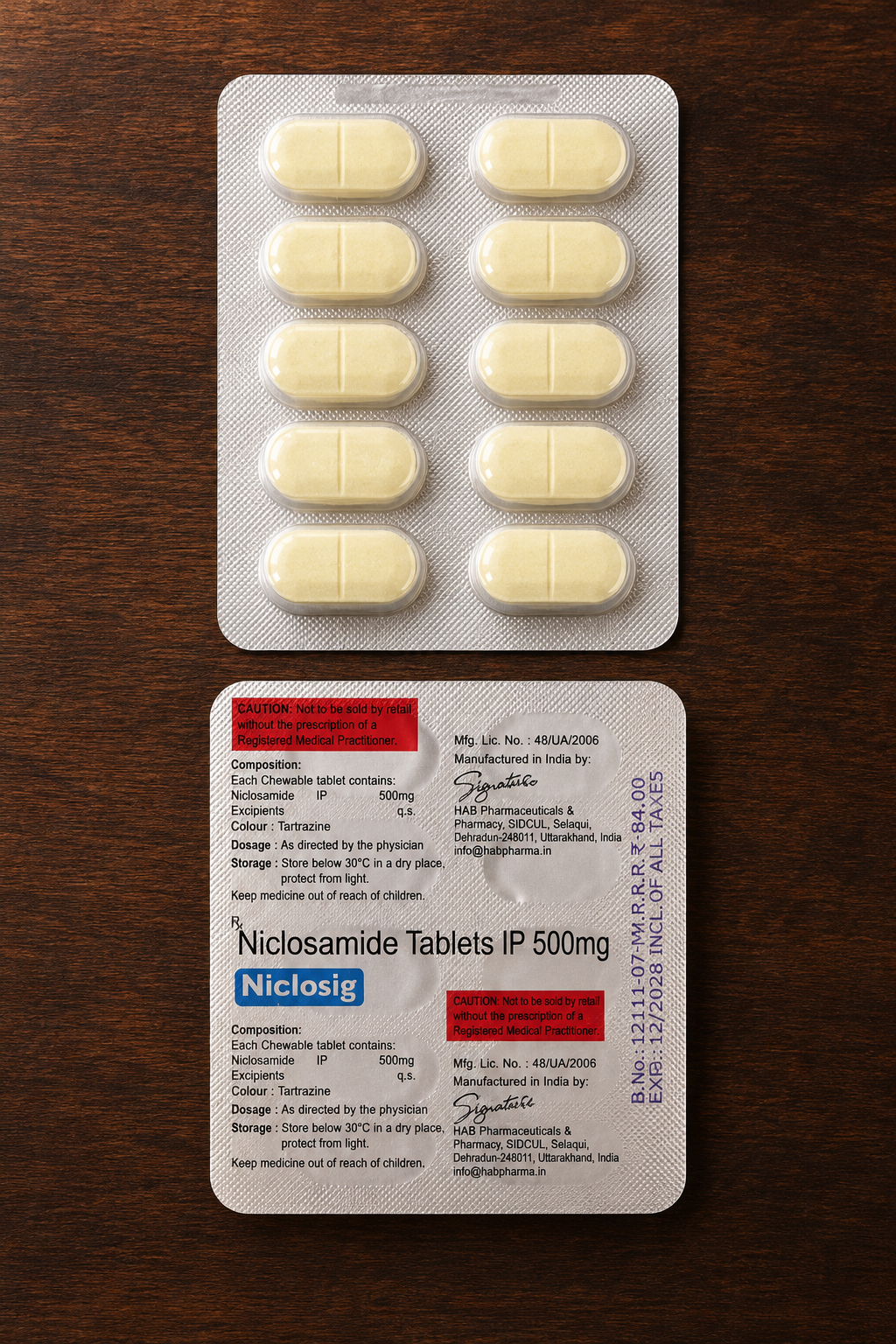
Niclosig (Niclosamide) 500 mg, 100 tablets
$84,50
Niclosamide 500 mg, 100 tablets
An anthelmintic medicine containing 500 mg of niclosamide in each tablet. It is used to treat intestinal infections caused by certain types of tapeworms, including beef tapeworm, pork tapeworm, broad fish tapeworm and dwarf tapeworm. The medicine acts mainly in the intestine. Use only as prescribed by a doctor.
Description
NICLOSIG 500 MG — PRODUCT DESCRIPTION FOR THE WEBSITE
The information on this page is provided for informational purposes only and does not replace medical advice. The medicine should be used only after a diagnosis has been established and in accordance with the recommendations of a healthcare professional. The treatment regimen may vary depending on the parasite species, the patient’s age, body weight and medical condition.
What is Niclosig 500 mg?
Niclosig 500 mg is a medicine containing niclosamide. Niclosamide is an anthelmintic agent that is mainly active against adult flatworms located in the intestinal lumen.
The medicine acts directly in the intestine and is absorbed into the systemic circulation only in small amounts. Under the action of niclosamide, the parasite loses its ability to maintain normal energy metabolism, dies, detaches from the intestinal wall and is eliminated from the body in the stool, either whole or in fragments.
It is not intended for self-treatment of extraintestinal larval forms of parasites.
Therapeutic indications
Niclosamide may be used on a doctor’s recommendation to treat intestinal infections caused by the following flatworms:
Beef tapeworm
Pork tapeworm
Broad fish tapeworm
Dwarf tapeworm
Before starting treatment, it is recommended to confirm the parasite species through laboratory examination of stool samples or by other methods recommended by a doctor.
When is niclosamide not effective?
Niclosamide is not a universal medicine against all types of intestinal worms. It is not used as the primary treatment for infections caused by pinworms, roundworms, hookworms or other nematodes unless a doctor specifically recommends such use.
including cysticercosis and echinococcosis. If involvement of the brain, eyes, liver, lungs or other organs is suspected, specialist investigations and a different treatment regimen are required.
Mechanism of action
Niclosamide comes into direct contact with the scolex, the main part of the flatworm by which the parasite attaches itself to the intestinal mucosa.
The active ingredient disrupts energy production in the parasite’s cells, including by inhibiting oxidative phosphorylation in the mitochondria. As a result, the scolex and adjacent segments die, and the parasite loses its ability to remain attached to the intestinal wall.
After the worm dies, it is eliminated during defecation. The parasite may sometimes disintegrate in the intestine, so the patient may not notice an entire worm in the stool.
What you need to know before use
Do not use the medicine
- if you have a known allergy to niclosamide;
- if you are allergic to any of the medicine’s excipients;
- without first consulting a doctor if the diagnosis of a parasitic infection has not been confirmed.
Tell your doctor
- about all prescription and non-prescription medicines you are taking;
- if you are pregnant, think you may be pregnant or are planning a pregnancy;
- if you are breastfeeding;
- about chronic medical conditions and a tendency to constipation;
- about any previous allergic reactions to medicines.
Special warnings
Constipation
If you are prone to constipation, regular bowel movements should be restored before starting treatment. The need for a laxative is determined by a doctor.
Pork tapeworm infection
In an infection caused by Taenia solium, special caution is required. A doctor may prescribe a saline laxative to promote the rapid elimination of parasite segments containing eggs and to reduce the risk of self-infection.
Alcohol
Driving and operating machinery
Some patients may experience dizziness or general malaise. Do not drive or operate machinery if symptoms affecting attention or reaction speed occur after taking the medicine.
Pregnancy and breastfeeding
Pregnancy
During pregnancy, niclosamide may be used only when there is a clear medical indication and the expected benefit to the mother outweighs the potential risk to the fetus. Particular caution is required during the first trimester.
Breastfeeding
There are insufficient data on whether niclosamide passes into breast milk. A doctor should decide whether the medicine may be used during breastfeeding after assessing the benefit–risk balance.
How to take Niclosig 500 mg
Use the medicine only at the dose and for the duration recommended by your doctor. The treatment regimen depends on the parasite species, the patient’s age and body weight, and the characteristics of the specific dosage form.
Do not chew, crush or dissolve Niclosig tablets unless this is permitted by the package leaflet supplied with your product. Different niclosamide products may have different administration instructions.
Take the tablets at the time specified by your doctor. Do not change the dose, repeat the course of treatment or add laxatives without consulting a healthcare professional.
General niclosamide dosing regimens
Taenia saginata, Taenia solium and Diphyllobothrium latum
| Patient category | Total amount of niclosamide | Equivalent number of 500 mg tablets | Duration |
|---|---|---|---|
| Adults and children over 6 years of age | 2000 mg | 4 tablets | Usually one day |
| Children aged 2 to 6 years | 1000 mg | 2 tablets | Usually one day |
| Children under 2 years of age | 500 mg | 1 tablet | Only on a doctor’s recommendation |
Hymenolepis nana — dwarf tapeworm
| Patient category | Day 1 | Days 2 to 7 |
|---|---|---|
| Adults and children over 6 years of age | 4 tablets of 500 mg | 2 tablets of 500 mg once daily |
| Children aged 2 to 6 years | 2 tablets of 500 mg | 1 tablet of 500 mg once daily |
| Children under 2 years of age | 1 tablet of 500 mg | ½ of a 500 mg tablet once daily |
Use in children, especially those under 2 years of age, is possible only after consultation with a doctor and under medical supervision.
Frequently asked questions about Niclosig 500 mg
Niclosig 500 mg is used to treat certain intestinal infections caused by flatworms. Safe and effective treatment requires a correct diagnosis, an appropriate dosage and monitoring of treatment results.
Is a laxative necessary?
A laxative should not automatically be used with every course of treatment. The need for one depends on the parasite species, bowel function and the regimen selected by the doctor.
In certain treatment regimens, a saline laxative such as magnesium sulfate or sodium sulfate may be recommended approximately two hours after taking niclosamide to promote faster and more complete elimination of the parasite.
Monitoring treatment effectiveness
After treatment has been completed, the doctor may recommend repeat stool testing to detect worm eggs and segments. Even if the symptoms have disappeared, laboratory follow-up may be required to confirm complete recovery.
- For dwarf tapeworm infection, follow-up testing may be performed approximately 14 days after completion of treatment.
- For other cestode infections, the doctor determines when repeat testing should be performed.
- The presence of parasite fragments in the stool for several days after treatment does not always indicate that the medicine was ineffective.
Hygiene and prevention of reinfection
- Wash your hands thoroughly with soap and water after every visit to the toilet.
- Wash your hands before preparing and eating food.
- Change underwear and bed linen regularly.
- Cook beef and pork thoroughly.
- Do not eat raw or insufficiently cooked freshwater fish.
- Use separate chopping boards and knives for raw meat.
- Follow personal hygiene rules throughout the course of treatment and after it has been completed.
Possible side effects
Like all medicines, Niclosig may cause side effects, although not every patient experiences them.
Digestive system effects
- nausea;
- vomiting;
- abdominal discomfort or pain;
- gastrointestinal disturbances;
- retching;
- diarrhea;
- decreased appetite.
Other possible reactions
- dizziness;
- a feeling of weakness or fatigue;
- skin rash;
- itching;
- skin redness;
- excessive sweating;
- worsening of the general condition.
if you develop difficulty breathing, swelling of the face, lips, tongue or throat, a widespread rash, severe weakness, loss of consciousness or bluish discoloration of the skin. These may be signs of a severe allergic reaction.
In case of overdose
Niclosamide is absorbed from the intestine only in small amounts; however, taking an excessive number of tablets requires medical assessment.
If you or a child accidentally takes more medicine than recommended, contact a doctor, pharmacist or emergency service immediately. Take the medicine package with you.
If you miss a dose
If you miss a dose during a multi-day course of treatment, take it as soon as you remember. If it is almost time for the next dose, skip the missed dose and continue treatment according to the usual regimen.
Stopping treatment
Do not stop the prescribed treatment early without consulting your doctor. Ending treatment too soon may allow the infection to persist and make another course of therapy necessary.
Storage conditions
- Store in the original packaging.
- Store at the temperature stated on the package, usually below 30°C.
- Protect from excessive humidity, heat and direct sunlight.
- Keep out of the reach of children and pets.
- Do not use after the expiry date.
Reviews
There are no reviews yet.